
ETQ Reliance Quality Intelligence
This Week in Quality – February 2, 2026
Rootstock Software reported 94% AI adoption among manufacturers with emphasis on supply chain planning and process optimization. Meta committed up to $6 billion to Corning through 2030 for fiber-optic cable in AI data centers. Tetra Pak invested €60 million in a pilot plant to advance paper-based aseptic packaging material.
Here’s a look at five stories in quality this week.
Ecolab Director Highlights AI and Analytics for Food Safety
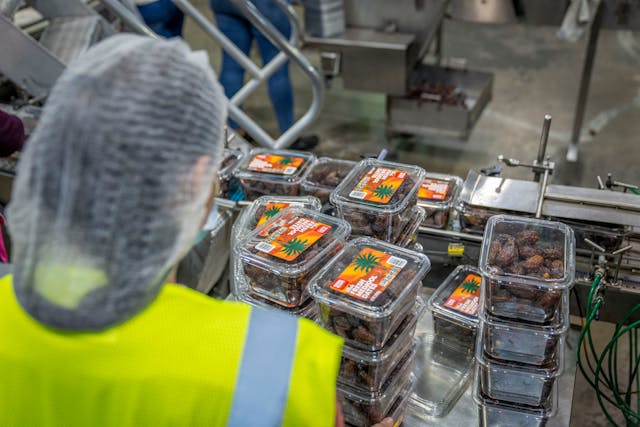
Mandy Sedlak, Director of Global Food Safety and Public Health at Ecolab, outlined career development pathways for food safety professionals while identifying emerging technology shifts reshaping the industry. Sedlak brings over 20 years of experience in restaurant and supply chain food safety, quality assurance and procurement leadership across leading foodservice brands.
Connected technologies and analytics powered by AI will drive efficiency and effectiveness in food safety operations according to Sedlak’s assessment of industry trends. The insights reflect Ecolab’s strategic focus on leveraging data-driven solutions to help customers mitigate risks in food safety, guest experience, public health, workplace safety and sustainability across foodservice and food retail sectors.

Meta Commits $6 Billion to Corning for AI Data Center Fiber Optics
Meta agreed to pay Corning up to $6 billion through 2030 for fiber-optic cable to support rapid construction of massive AI data centers as the company attempts to keep pace with artificial intelligence infrastructure demands. The multi-year contract with the 175-year-old glass manufacturer represents a strategic investment in optical fiber connectivity essential for high-speed data transmission across distributed computing facilities.
Corning is expanding manufacturing facilities to accommodate growing demand from Meta and other technology companies including Nvidia that are building large-scale AI training and inference infrastructure. The agreement provides Meta with dedicated fiber-optic cable supply while securing long-term production capacity for Corning as global data center construction accelerates to support machine learning workloads and generative AI applications.
Tetra Pak Invests €60 Million in Paper-Based Packaging Technology
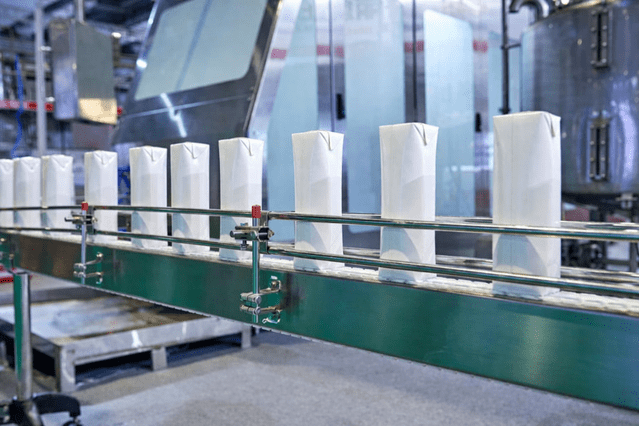
Tetra Pak invested €60 million in a new pilot plant in Lund, Sweden, to advance paper-based barrier technology replacing aluminum foil in aseptic beverage cartons, increasing renewable content to approximately 92% while reducing carbon footprints by up to 43%. The paper-based barrier maintains food safety and shelf life comparable to aluminum foil packaging while simplifying recycling processes by reducing material types from three to two.
The Lund facility will accelerate development and customer collaboration for the paper-based barrier layer manufacturing, building on the company’s 2023 launch of the world’s first aseptic beverage carton without aluminum. The investment strengthens Tetra Pak’s position in sustainable packaging development with improved paper recovery rates and high-quality fiber and non-fiber fractions for recyclers processing liquid packaging cartons.

BP and Corteva Launch Etlas Joint Venture for Biofuel Feedstock
BP and Corteva Agriscience launched Etlas, a joint venture focused on producing sustainable crop-based feedstocks for renewable diesel and sustainable aviation fuel using canola, mustard and sunflower grown on existing farmland between food-crop seasons. Initial feedstock supply is planned for 2027, with production scaling to approximately one million tonnes annually by the mid-2030s, potentially yielding more than 800,000 tonnes of low-carbon fuels per year.
The joint venture combines BP’s integrated downstream capabilities with Corteva’s seed technology to strengthen the biofuels value chain and support transportation sector decarbonization without expanding agricultural land use. Executive leadership positions in Etlas have been assigned from both companies, demonstrating joint commitment to long-term development of sustainable biofeedstocks for renewable fuel production across North American and global markets.
Saint-Gobain Positions India as Manufacturing Expansion Hub
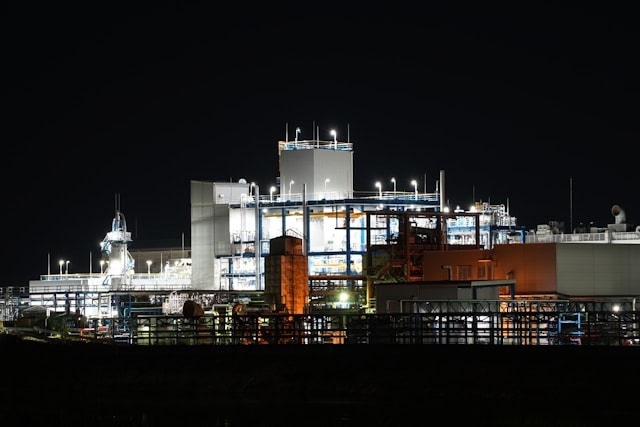
Saint-Gobain is positioning India as a cornerstone of its global manufacturing strategy with plans to expand capital expenditure and pursue acquisitions as the French construction materials company builds decade-long deployment capabilities. CEO Benoît Bazin told CNBC that land acquisitions in India are now made with long-term strategies in mind, explaining the company is building capabilities to export to Southeast Asia and Australia beyond serving the domestic market.
The strategic shift reflects Saint-Gobain’s recognition of India’s manufacturing infrastructure and export potential for construction materials across regional markets. The company’s Indian operations are transitioning from primarily domestic production to integrated manufacturing and distribution hubs supporting international supply chains, with facilities designed to serve growing construction demand in emerging Asian markets while leveraging India’s competitive manufacturing cost structure and skilled workforce.